


Buddhist Travel in Sikkim
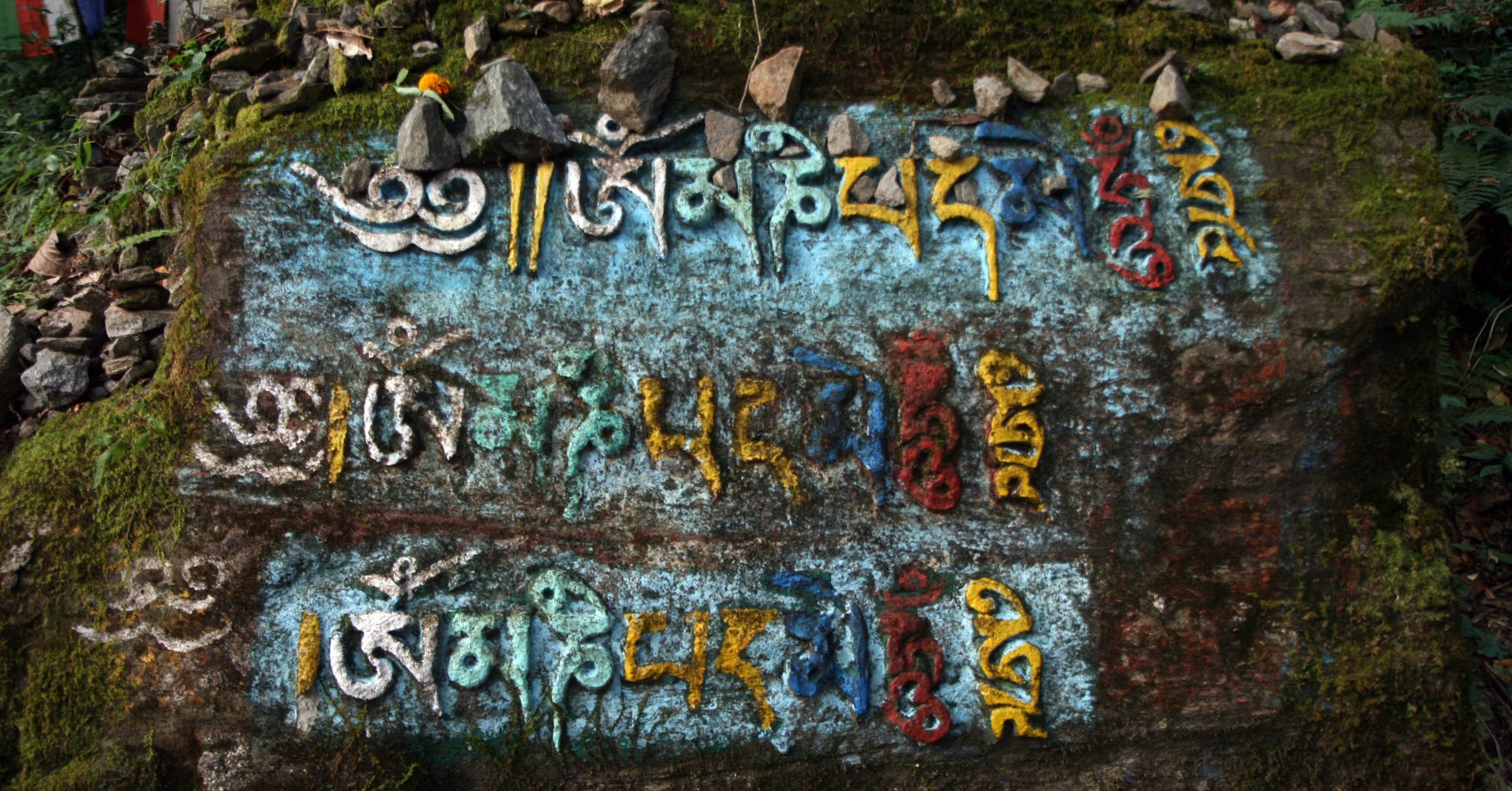
There are few countries that were ruled by a religious king – Sikkim was one of them. The office of the Chogyal (= Dharma King) was established in 1641. At that time, three monks under the leadership of Lhatsun Chenpo followed the prophecy of the great tantric master Guru Padmasambhava and met in Norbugang, a plateau in present-day Yuksom. They meditated and found a suitable man: Phuntsog. They bestowed upon him the noble name Namgyal, which was to accompany his own name, and crowned him as the first Chogyal of the newly founded Kingdom of Sikkim, with its capital in Yuksom. They also decreed that Buddhism would be the religion everyone should follow and Nyingma the ruling Buddhist order.
At that time, the inhabitants within the borders of this new kingdom were mainly Lepcha and Bhutia. The former practiced a mixture of Buddhism and their ancient animistic beliefs, while the latter were already Buddhist. The population was small, the steep mountain slopes were covered with dense forests, and everything was overlooked by the sacred mountain Kangchendzonga.
However, it was not easy for these people to live in harmony and peace, as neighbouring countries sought to expand. As a result, wars repeatedly shifted the borders. Even the second Chogyal had to move his capital from Yuksom to Rabdentse, which was a safer location in 1670. In 1975, Sikkim could no longer maintain its independence and became a state of India. Today, the majority of Sikkimese people are of Nepalese origin, and Hinduism is the most widely practiced religion.
Yet, despite all the political turmoil, Buddhism has flourished from the very beginning, and more and more monasteries were built. Most of them are Nyingma monasteries, but there is also a Bon monastery, and the Rumtek Monastery, home of the Karmapa, belongs to the Karma Kagyu order.
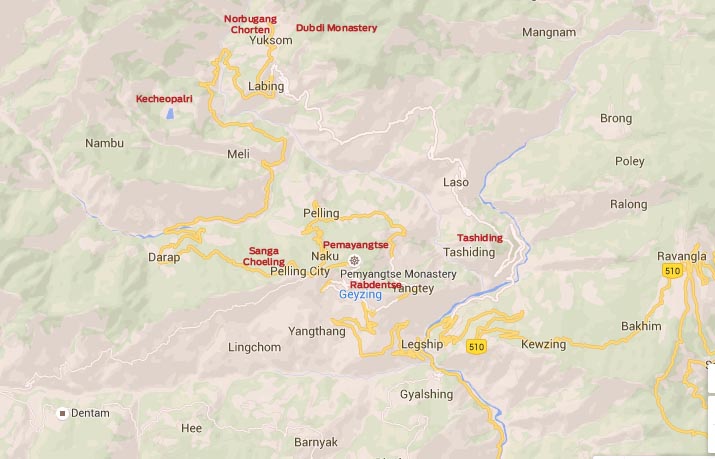
There is a Buddhist pilgrimage trail that you can follow directly or combine with other places of interest. The following locations are part of it: Norbugang Chorten, Dubdi Monastery, Pemayangtse Monastery, Rabdentse, Sanga Choeling Monastery, Khecheopalri Lake, and Tashiding Monastery. These places offer a fascinating insight into the past and present of Sikkim. We can imagine life as it was 350 years ago and learn more about Sikkim’s turbulent history. We can reflect on a land where politics and religion went hand in hand. And we can learn more about Buddhism in general and the Nyingma order in particular. Guru Padmasambhava had a major influence on this branch of Buddhism. And of course – if you wish – you can combine this tour with meditation practice, Buddhist teachings, and readings.
Travel Notes
Since the locations are close together, it doesn’t take much time to visit them all. You can combine this tour with other Buddhist sightseeing in Sikkim and the Darjeeling area, focus on encounters with the different ethnic groups to learn about their daily life, or discover more about Sikkim’s biodiversity. Trekking is another great option for your time in Sikkim – you can simply enjoy the landscape or continue your Buddhist practice through mindful, slow walking. Some sites along the Buddhist pilgrimage trail can also be combined with day hikes.
…
We will put together your customized Sikkim Buddhism tour!
Norbugang Chorten
The Norbugang Chorten was erected at the site where the first Chogyal of Sikkim was crowned. The three monks collected soil and stones from all regions of Sikkim and built the chorten together with many offerings generously donated by the people for this special event. The consecration festivities of the chorten lasted 21 days. Today, it is surrounded by a beautiful, peaceful park filled with prayer flags. The grounds also feature the coronation throne and a footprint of Lhatsun Chenpo.
Dubdi Monastery
This is considered the oldest monastery in Sikkim, as it was built on the spot where Lama Lhatsun Chenpo meditated in seclusion. Founded in 1701 high above the village of Yuksom, reaching this peaceful sanctuary requires climbing a steep 1.2 km path through dense forest. No monks reside here, only a caretaker who performs the rituals and keeps the site clean. Next door is a monastic school for about 20 boys who are always happy to receive visitors.
Sanga Choeling Monastery
Located near Pelling, this monastery was also founded by Lhatsun Chenpo towards the end of the 17th century. A steep path leads up to the monastery, offering fantastic views on clear days. On the tenth day of every month according to the Tibetan calendar, the monks recite hymns here. The morning and evening prayers are also a very special experience.
Rabdentse
In 1670, the second Chogyal moved the capital from Yuksom to Rabdentse. However, it remained the capital only until 1814, when it was destroyed by the invading Gurkha army. Today, only ruins remain, accessible via an easy 1 km walk through a beautiful forest. They are situated on a ridge offering spectacular views.
Pemayangtse Monastery
This monastery was likewise founded by Lhatsun Chenpo in 1705. It is the largest Nyingma monastery in Sikkim and serves as the head monastery for all others. The monks must all be Bhutias. The monastery is intended exclusively for “Pure Monks,” meaning they must be celibate and free of physical impairments. The head lama was the only person in Sikkim privileged to anoint the Chogyals with holy water. Every February, the Cham dances are performed here.
Khecheopalri Lake
This small lake is sacred to both Buddhists and Hindus, who believe it to be a wish-fulfilling lake. A leaf never rests on the water’s surface, as birds immediately pick them up. The shores are adorned with prayer flags, chortens, mani stones, and a small shrine. The lake is home to many fish, which are fed by devotees. While you cannot walk around the lake itself, a trail leads up a nearby hill offering a lovely view over the water. A hiking path connects Yuksom to Khecheopalri, taking about 4 hours.
Tashiding Monastery
This monastery was founded by Ngadak Sempa Chenpo, another of the three monks. Construction began in 1641, and the main structure was completed in 1717. Due to its location, it is considered the spiritual heart of Sikkim. In February/March, it hosts the Bhumchu Festival, a celebration dedicated to predicting the future. The monastery can be reached via a walking path from the village – or on a long full-day trek starting from Dubdi.
Other sites of interest for Buddhists include:
Rumtek
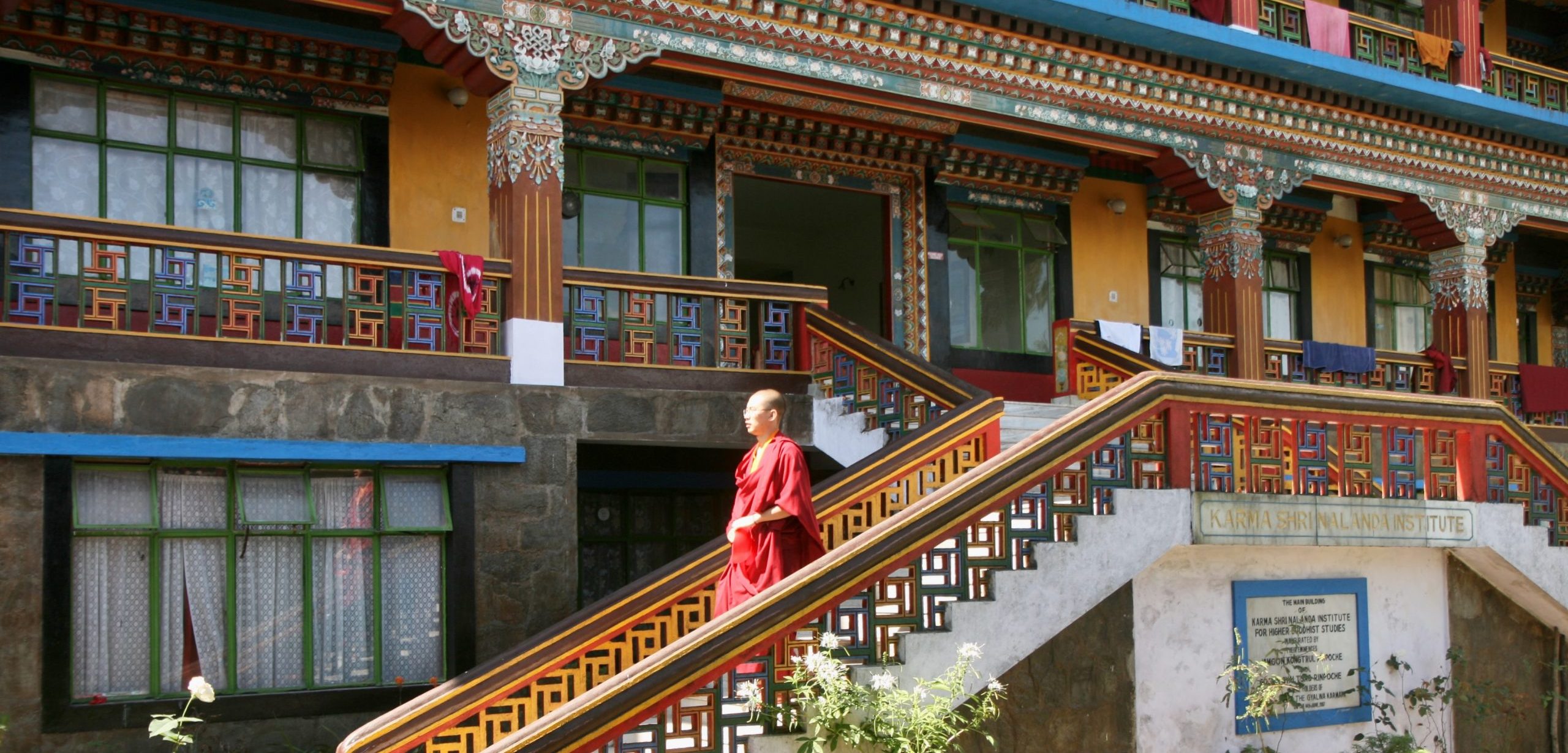
houses the largest monastery in Sikkim. It was established by the Karmapa and thus belongs to the Karma Kagyu order. Regrettably, there is a ongoing dispute regarding the “true 17th Karmapa,” with two candidates each claiming the title. The relics of the 16th Karmapa are enshrined in a golden stupa. Regardless of the controversy, the monastery remains vibrant with monastic activity, and the Karma Shri Nalanda Institute for Higher Buddhist Studies is located just opposite.
Kewzing/Ravangla
Situated between Kewzing and Ravangla is one of only two officially recognized Bon monasteries located in India. Bon is the indigenous faith that dominated Tibet and surrounding areas prior to the arrival of Buddhism. Several elements, such as prayer flags and incense burning, are said to have been integrated into Buddhist practice from Bon. Discovering the similarities and differences makes for a fascinating experience.
Namgyal Institute of Tibetology
Located in the capital city of Gangtok, this center for Buddhist philosophy houses a vast collection of Buddhist masks, manuscripts, statues, and ritual artifacts. It is also the premier institute dedicated to the research of Tibetan language and culture.
Dzongu
is the homeland of the Lepcha culture, which features a compelling blend of animistic beliefs and Buddhism. Visitors can explore small monasteries and, with a bit of luck, witness monks conducting traditional rituals.
Naturally, there are many other monasteries throughout Sikkim – some with resident monks year-round, others used solely for specific ceremonial occasions.
To have us design your customized Sikkim Buddhism tour, please complete this form: