


ZANSKAR

Zanskar is Ladakh’s little sister. Located at the southern tip of the Kargil district, this small enclave spans 7,000 square kilometers. With an average altitude of 4,000 meters, Zanskar is one of the highest inhabited regions on Earth. Only about 14,000 people settle an area roughly half the size of the German state of Schleswig-Holstein. Most of them follow Tibetan Buddhism. Until recently, they lived in extreme isolation: for seven months of the year, the gravel road into the former kingdom in the Indian Himalayas—built only in 1980—was covered in snow and ice. During this time, Zanskar was cut off from the outside world. Due to its unique location, the indigenous culture in this small country south of the main Himalayan ridge has been unusually well preserved. Over the centuries, the Zanskaris have retained their traditions and traditional communal values. One might think that time has stood still in this remote part of the world. Yet upon closer inspection, it flows just like anywhere else.
That was then. In 2021, the road across the Shinkun-la was completed, the Wanla-Padum route via the Singge-la past Photoksar has since also become passable, and the pass-free road along the Zanskar River officially opened in 2026. The route between Kargil and Padum, which used to take 10 hours, has been fully paved and is considered one of the best roads in the Indian mountains. The construction company was also tasked with clearing the pass in winter. As a result, access in the winter of 2023/24, for instance, was closed for only two weeks. These enormous changes—along with the now many educated young Zanskaris—are naturally transforming society and everyday life in a very short span of time. Therefore, a trip to this region is currently particularly exciting.
“Mass tourism” has not yet found its way here; travelers are mainly Indians on motorcycles. There are still plenty of trekking routes in areas untouched by road construction, too. Together with impressive monasteries, astonishing landscapes, and warm-hearted people, Zanskar offers a great deal for an amazing journey.
Below, we briefly outline a few topics that may be of interest for a stay in Zanskar. I am happy to provide further information—having spent intense times in Zanskar with the photo project Kamerakidz.
Arrival, Departure, and Getting Around
Previously, there was only one dead-end road into Zanskar: the 230 km stretch from Kargil to Padum. Since 2024, it has been in very good condition, reducing travel time for the route to about 5 hours. You can break up the tour in the middle at Rangdum, a beautiful high valley with a uniquely positioned monastery and a nice camp. Meanwhile, there are also roads via Wanla-Lingshed-Padum (approx. 9 hours from Leh) and the Shinkun-la toward Keylong. This has made Zanskar very attractive for circular tours!
You can find a detailed blog post on the Delhi-Manali-Darcha-Padum-Leh route here:
Even though there are now many roads and traffic has increased, Zanskaris often still cover long distances on foot. We believe that at least walks or hikes should be integrated into a Zanskar tour—if not a full trekking tour. It is the only way to truly experience the vastness and scale of the landscape.

Accommodation
The accommodation situation in Zanskar is limited, especially in the higher-end segment. There are few hotels in Padum and the surrounding area, which tend to be in the 2-star category. An exception is the high-quality Sarai camps in Purne and Tsazar. On the other hand, many guesthouses and homestays are now scattered throughout the Padum Valley. Construction is also underway in many corners and places—Zanskar is undergoing a transformation in traveler accommodations as well. We stay up to date and will see what we can specifically offer you.

Monasteries and Buddhism
The Zanskaris follow Tibetan Buddhism (with a small Muslim minority in Padum) and recognize the Dalai Lama as their spiritual and religious leader. There are 10 major monk monasteries and 6 smaller nunneries, as well as various supervised temple buildings found in all villages. Phuktal is currently only accessible on foot (30 minutes from the end of the road). All monasteries are open to visitors and well worth a tour. In summer, popular monastery festivals beloved by all locals take place in Sani, Karsha, and Stongde. Another important date in the Buddhist calendar is Buddha Purnima (the birth, enlightenment, and death of the Buddha), during which the sacred books are carried from the Pothang via Pibiting and Padum. This event typically takes place in May or June.

Trekking
Zanskar is a trekking paradise. While road construction has somewhat limited the options, much is still possible:
- Stongde-Ichar / 4 days
- Stongde-Phuktal / 5 days
- Lingshed-Karsha / 5 days
- Rinam-Rangdum / 8 days
- Zangla-Phuktal / 6 days
- Dangze-Sarchu / 4 days
- Phuktal-Shade-Brandy Nalla / 8 days
- Zangla-Juktak / 9 days
- Kanji-Rangdum / 3 days
- Kanji-Lingshed / 6 days
- Zangla-Hemis / 9 days
- Glacier Trek: Bardan-Miyar Valley / 7 days
- Glacier Trek: Akshu-Atholi / 5 days
- Homestay Trek: Zangla-Tsazar-Kumik-Shila-Phu-Pipchar / 4 days
Please contact us for further trekking information and route variations!

Schools
Visiting a school is always an interesting, heartwarming experience. It’s fascinating to see how students cope with simple conditions while learning eagerly and with great concentration. Government schools are widespread across Zanskar—however, some lack teachers and quality education. Western-sponsored private schools were for years the only conceivable alternative to the poor conditions of state schools. Those wishing to continue their education after the 12th grade have had the opportunity to do so at the Government Model Degree College (GMDC) in Padum since 2012. As interested visitors, you are certainly warmly welcome to drop by a school! And we would love to show you the Secpad School in Youlsum (near Karsha), where the Kamerakidz Project took place.

Festivals
Zanskaris love to celebrate! In addition to the aforementioned monastery festivals, which everyone streams to if they are able, the multi-day New Year festival of Losar is the highlight of the year. On August 15th, Indian Independence Day is celebrated in Padum with performances by various schools. Weddings are often celebrated in July, when agriculture requires slightly fewer hands, and archery competitions in the villages accompanied by cheerful drinking are another great opportunity for festivities. You might get lucky, stumble upon a celebration, and be invited to join in. A flexible, relaxed travel itinerary will certainly come in handy for this. Additionally, the Zanskar Tourism Festival typically takes place in July/August.

Villages
There are 45 villages in Zanskar, some consisting of only 5 houses or fewer. Many villages are located along existing roads, and only two (Ralakung and Shade) can be reached exclusively on foot. All Zanskaris practice agriculture and animal husbandry, and they must store food and fuel for the long, harsh winter (even after the opening of the roads). Life is strictly regulated by the seasons. Share in village life for a few days! Watch how the soil is plowed, the grains are sown, and the fields are irrigated. And when harvest time comes, you can observe many activities such as harvesting, threshing, separating, roasting, milling, and storing. Much is still done as it has been for centuries, even though more and more modern machinery is being used to help. The autumn cattle drive, when all the yak herds are driven back to the stables, is a sight worth seeing (though hard to plan for, as there are no pre-fixed dates).

Other Activities
The range of things to do and visit in Zanskar has expanded. Let these ideas inspire you:
- Day hikes (e.g., Zangla-Tsazar, cave temple above Tahan, Shila-Pipchar)
- Walks (e.g., Youlsum settlements, Uparang, Bardan Monastery from the opposite riverbank)
- Lighting butter lamps
- Searching for stones (during a trek or as a day activity)
- Petroglyphs
- Yak cheese and paneer production
- Viewpoint at the Darang Drung Glacier
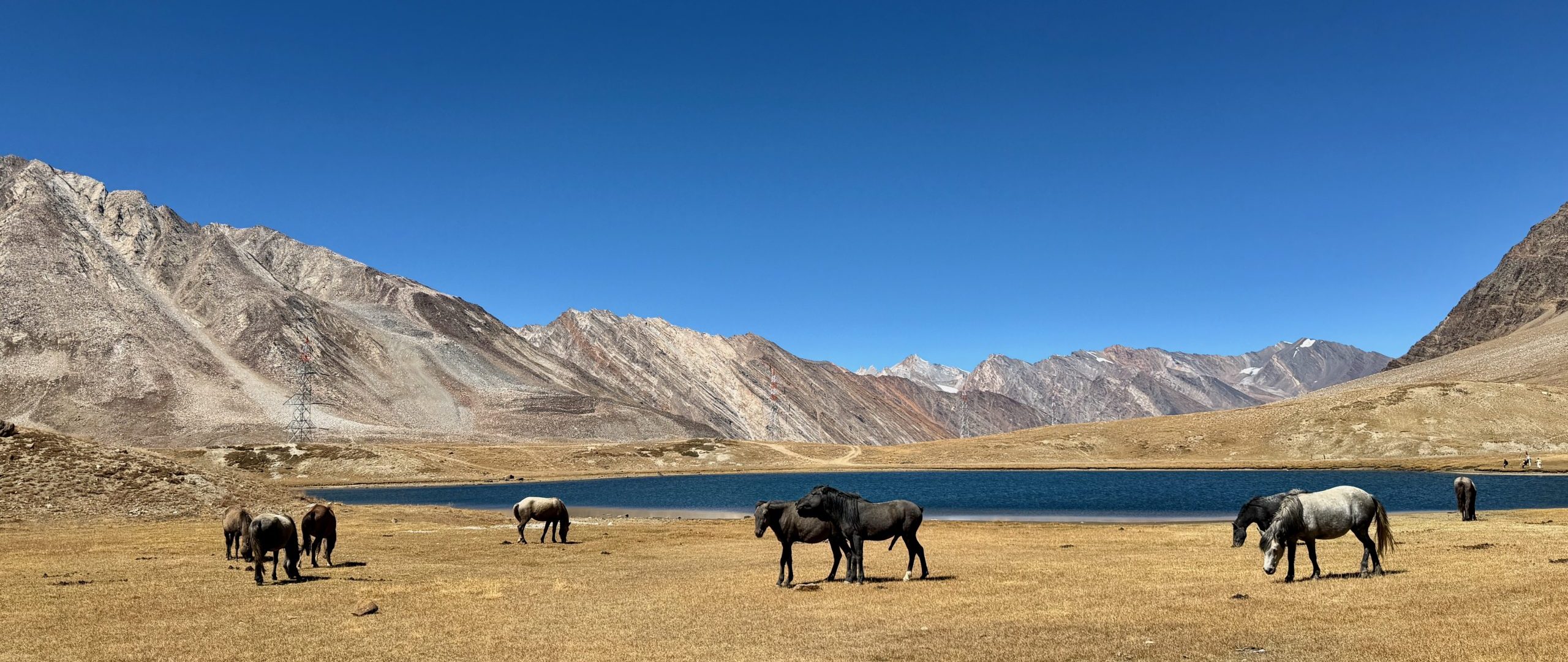
- Visiting the lakes at Penzi-la
- Waterfall in Shila
- Picnic in a beautiful landscape, gladly combined with walks or hikes
- Sacred lake in Sani
- Abandoned village of Kumik (Heritage Village) with a new village at its base
- Visit to the Amchi (traditional Tibetan medicine practitioner)
- Overnight stay near the sacred mountain Gombo Rangjon
- Buddhism workshop
- Overnight stay in a remote location like Shila Phu
Winter
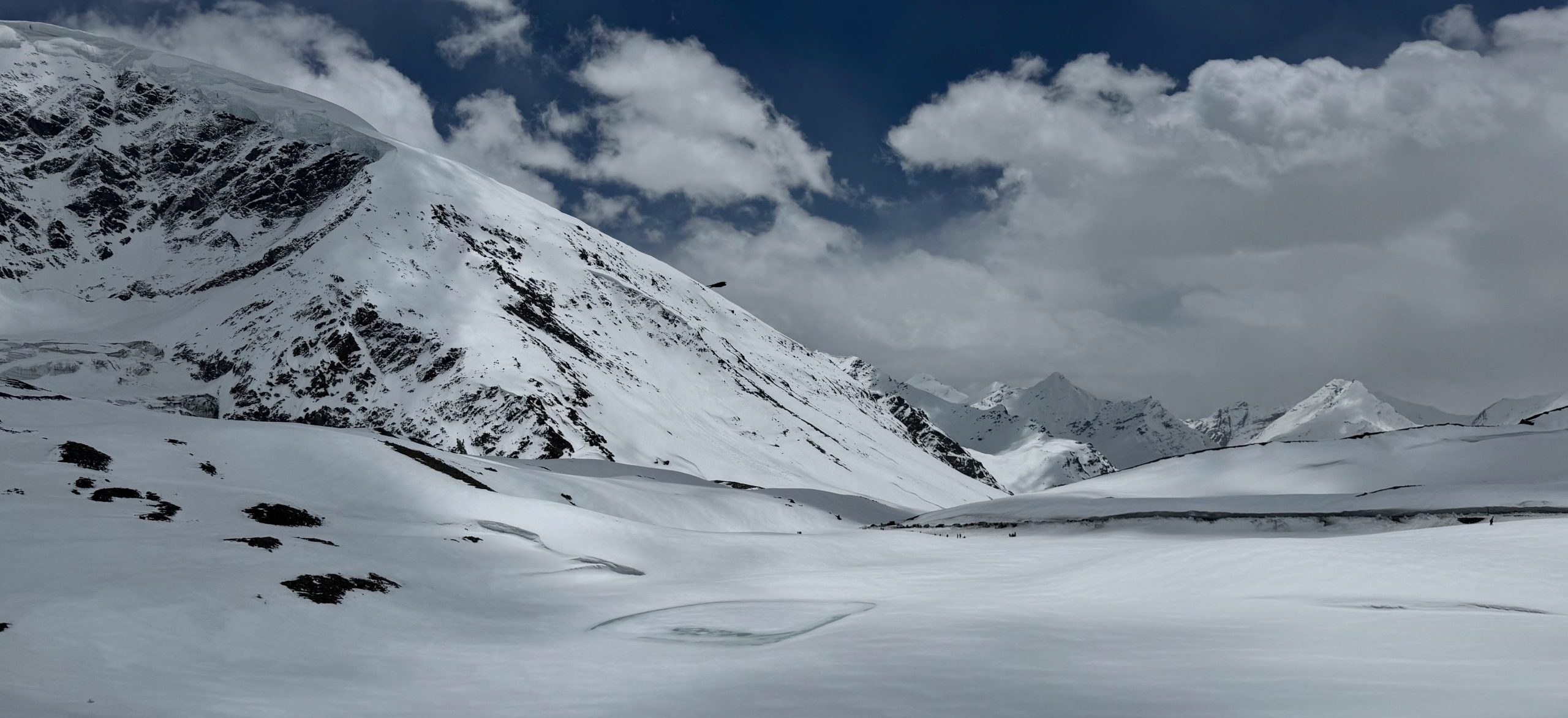
Winter in Zanskar is a grand adventure—strictly for the hardy… Previously, the only ways to reach Zanskar during the road closure on the Penzi-la were an expensive helicopter flight or the January/February trek across the frozen Zanskar River. The Zanskaris are among themselves, with plenty of time for one another, spontaneous celebrations, volleyball matches, and endless conversations. The children slide down slopes on homemade skis and sleds, glide across frozen patches of ice, and the women knit, spin, comb wool, etc. Thanks to the expanded road with good pass-clearing from Kargil and the new road from Nimmu, Zanskar is much more accessible in winter—and organized tourism is now also a possibility here. The first snow leopard tours are also being offered.
Blog and Films
You can gain personal insight into my trips to Zanskar in 2024 and 2026 through my blog posts:
Additionally, you can watch my own films on YouTube: